

Shadow Imprints
Everything is a reflection of our inner world.
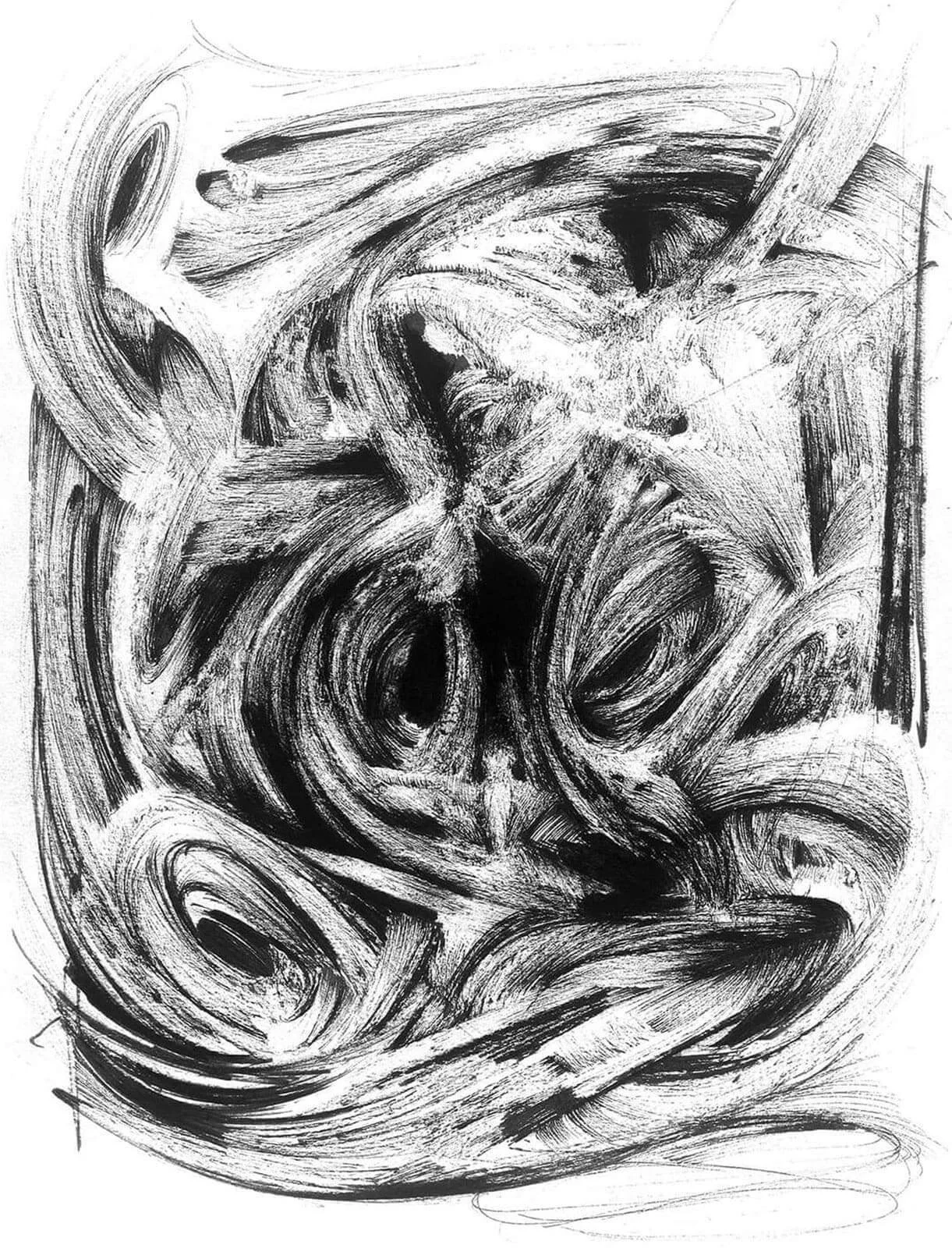
It sounds like nothing more than a worn-out phrase — and it remains one until we begin to encounter the true depths of the mind.
The reality most of us perceive is only the tip of the iceberg, perhaps five percent of the whole. Within this narrow surface layer we live our lives and make our daily decisions.
Yet those decisions are shaped by countless subconscious beliefs that guide us from deeper layers of the mind, quietly steering us in different directions throughout life. Many of these patterns grow out of unresolved traumas whose energies remain active, even long after the memories themselves have faded from awareness.
And then there are generational imprints, family patterns — even burdens carried over from previous lives.
But how does the unfolding of a painterly or graphic language relate to any of this?
In the same way everything else does.
We project the imprints of our inner world into form, even when the process is entirely unconscious. Every personal reality reflects traces of an inner landscape.
Of course, the idea that the world is a mirror now sounds like just another tired cliché. Believing it is one thing, but experiencing it is something entirely different — especially when you begin to see how shifts in the subconscious gradually emerge as different life circumstances, or even as new forms of creation.
What happens when this inner world begins to transform? What if we dismantle it so the foundations can be shaped again?
For me, the answer only became tangible during an intense healing process that unfolded over several years.
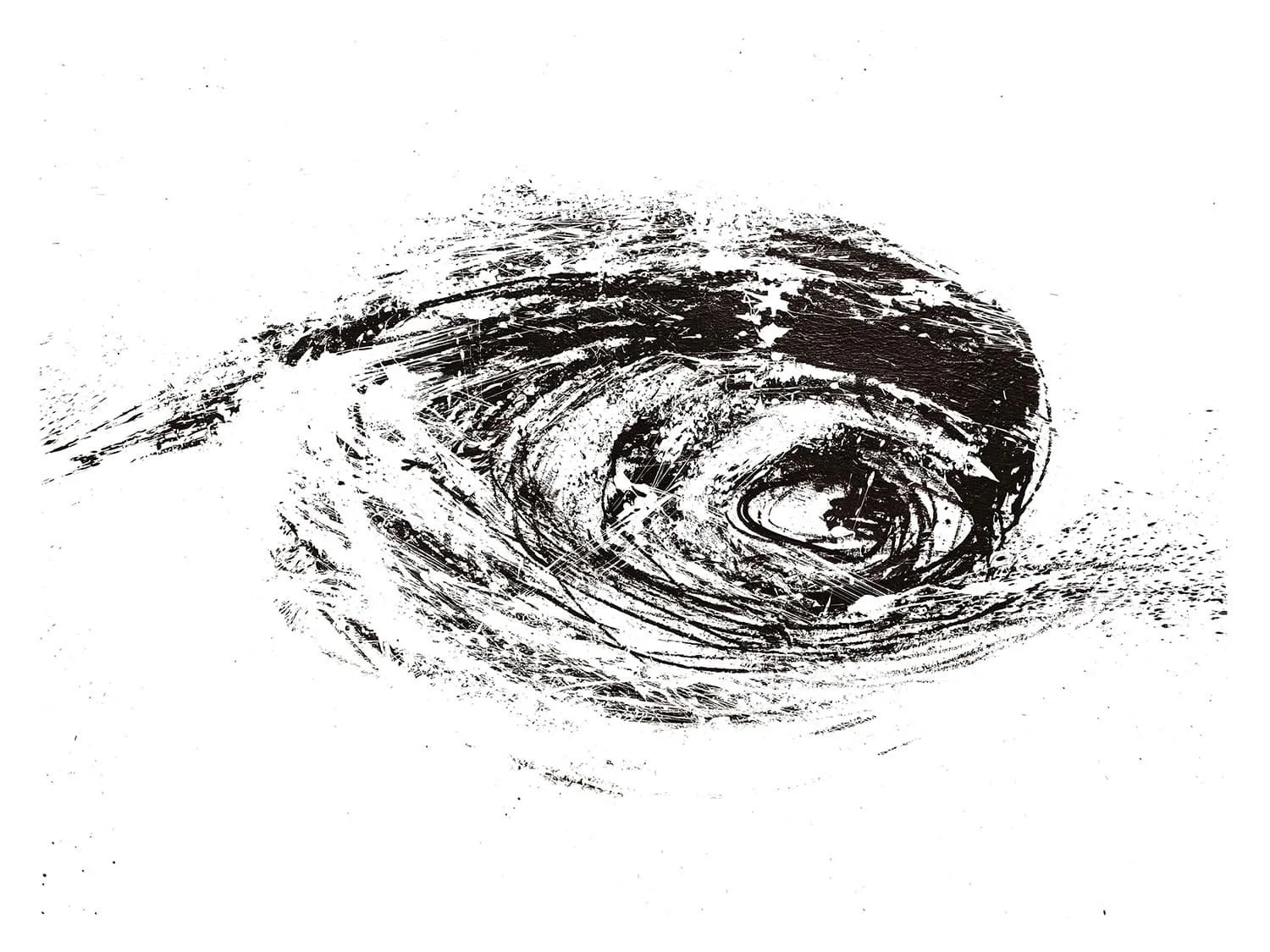
Renewing energy emerging beneath the layers as they fall away.
In 2019, after practicing the Anamé Kundalini program for about a year, the panic disorder that had dominated my life for so long suddenly disappeared. After years of struggle, it was gone almost from one week to the next, and something that had once seemed nearly unimaginable abruptly became reality.
I felt calm. Even in the middle of the largest crowds.
That was it, I thought.
But after a few weeks of lightness, I found myself face to face with forces that had been lying beneath the layer of anxiety, hardened and unmoving. Dense, almost tangible childhood feelings that had long been buried deep within my consciousness.
That was the first time I truly understood. Panic disorder had only been the tip of the iceberg.
Below the surface, I began to confront the energies that had led me there in the first place.
The dense, anxiety-filled abstract drawings were suddenly replaced by a lighter graphic language, carrying a completely different kind of energy.
Even though I had no intention of expressing any of this process at the time. The timing felt almost accidental.
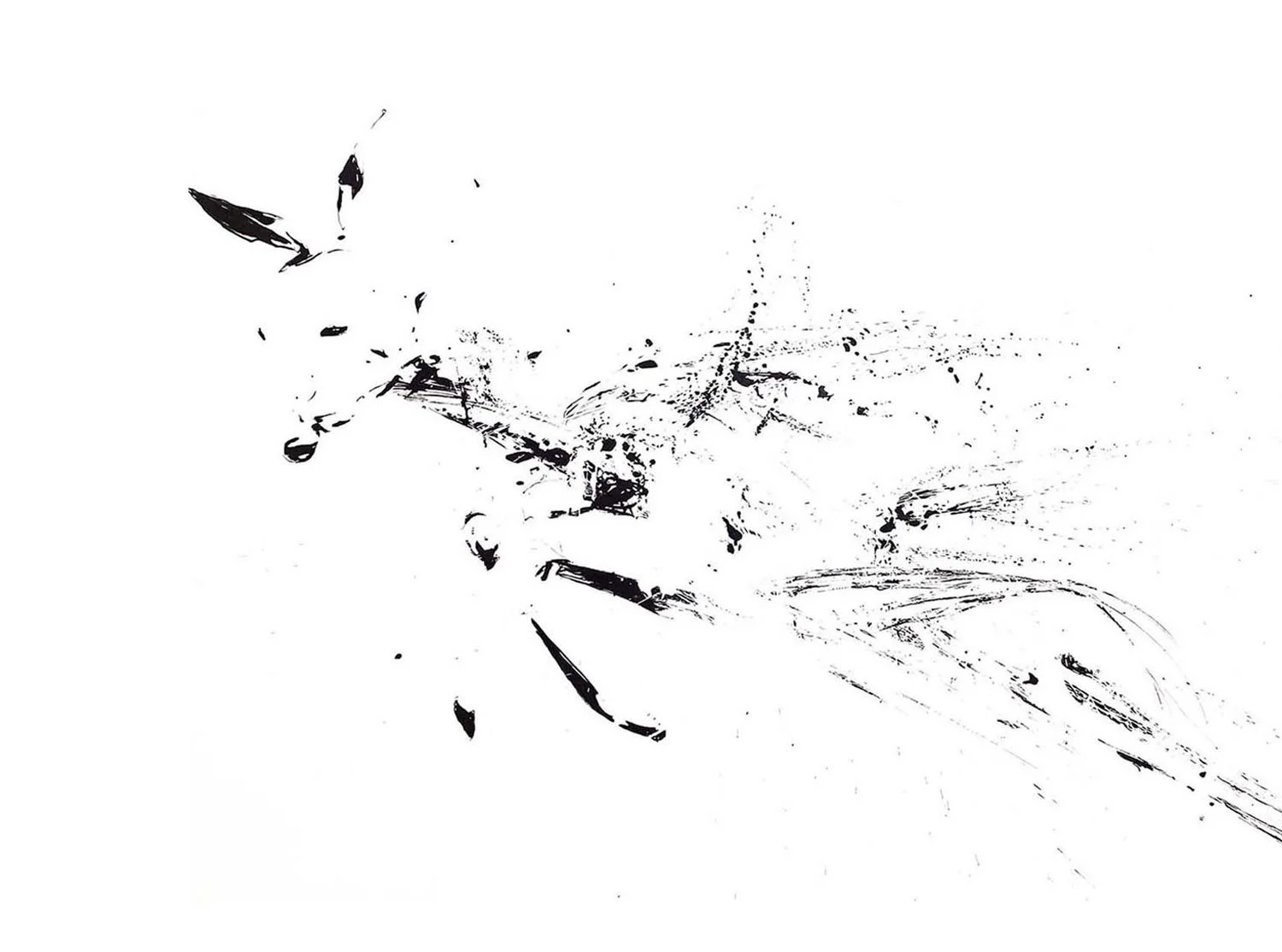
Revisiting long-separated emotions.
But let’s not get ahead of ourselves.
In the spring of 2017, the anxiety hadn’t actually been resolved — it had only been set aside so I could buy some time and keep up with my graphic design studies. At the time, this was made possible by an anti-anxiety pill I took each morning.
After a great deal of struggle and many trials, I slowly came to accept that I had only managed to treat the symptoms temporarily. Even if it was with medication, I was grateful that the symptoms had eased, and I hoped that in a few months I would be able to live without anxiety — without any kind of crutch.
Over time, the fear was gradually replaced by a feeling I hadn’t experienced in a long while.
Anger.
At first it appeared only in small moments — when a misplaced line during a drawing exercise suddenly struck a nerve.
“I can’t even get this right?”
“I can’t believe this, for fuck’s sake.”
At times these moments brought to the surface a deep, unspoken sense of inadequacy that seemed to appear most strongly whenever I couldn’t complete a task properly.
After the long winter of withdrawal, it felt as if I could see a little further behind these reactions. They became more tangible — or perhaps more understandable. It’s difficult to describe, but it was as if I had gained a clearer view of what lay behind certain feelings.
Where were these uncomfortable triggers coming from, these echoes of false self-images?
At times I felt a level of anger that I could no longer keep hidden behind the scenes.
Eventually it all began to settle, and an uncomfortable realization slowly took shape.
The things I had been trying to steal from others for years — attention, love — were never something anyone could actually give me. Not even if I performed every task perfectly.
In fact, the opposite seemed to happen. It only led to rejection.
And yet, no matter how much I tried to pretend otherwise, I was deeply dependent on the attention and recognition of others.
And it almost made me explode.
One day, after returning home from school, I decided to try something. I vaguely remembered a place I used to visit often as a child — somewhere just beyond the edge of the city. Tete… or Tetepuszta. I’m still not sure.
I simply wanted to scream everything out of myself.
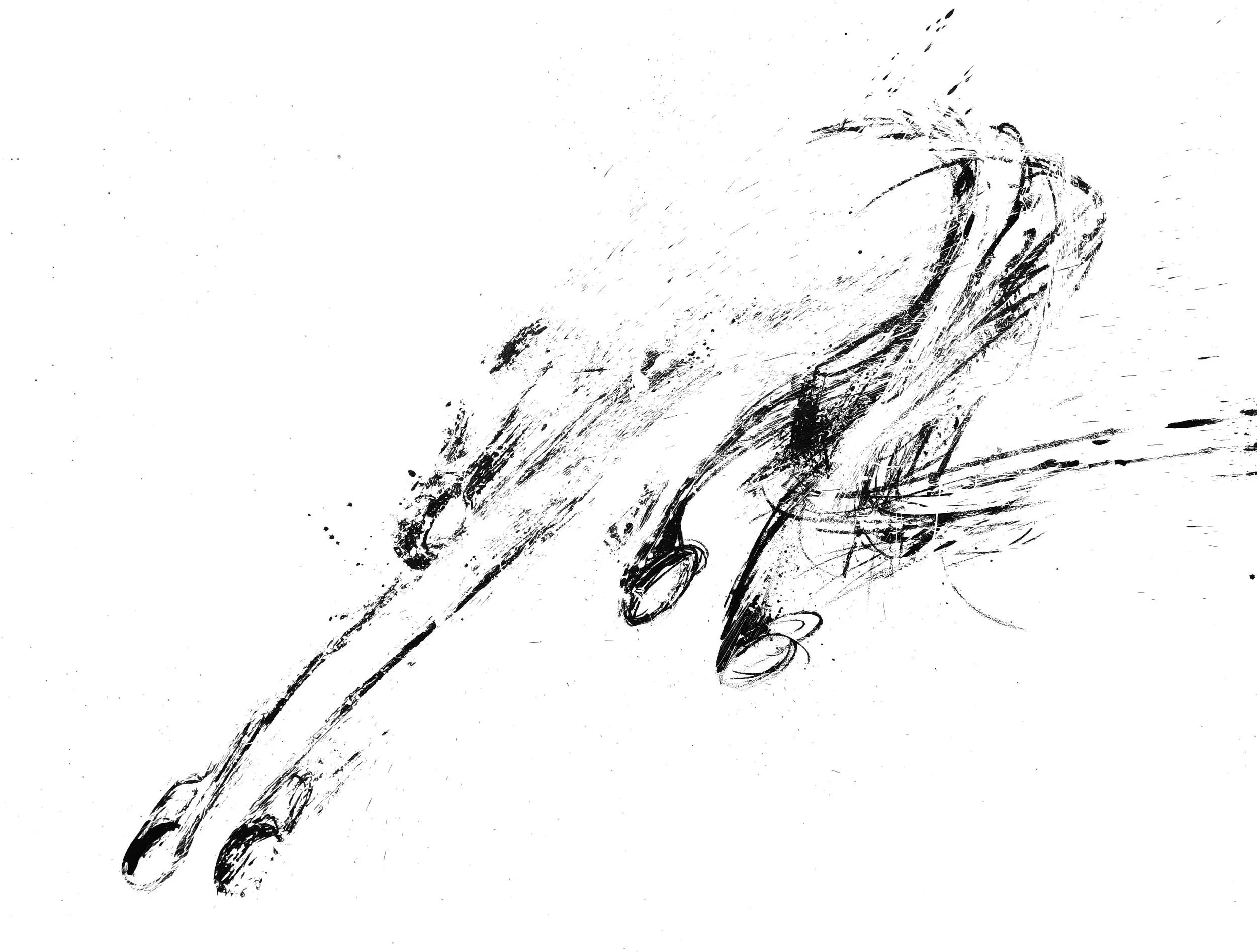
There is no stopping.
Earlier that day, just a few hours before, I had almost run home from school, trying to find some way to release the tension other than smashing up the bathroom.
But by the time I reached that place, all I felt was calm.
March birdsong. Not a single person around. Just an empty field, with a dense forest in the background.
How could I possibly feel angry here? I thought.
Still, if I had come all this way, I might as well try what I came for.
And yet the idea of screaming at the top of my lungs suddenly felt strangely unnatural.
What if someone hears me?
There it is again… that damn need to meet everyone’s expectations.
And just like that, it started to come back. A feeling. As if someone else were there.
That’s why I came out here…
Why?
Because… I’m angry.
At who?
I think… at people.
Why?
Because I don’t get it from them.
Get what?
Love. Acceptance.
That’s something only you can give yourself.
But I don’t know how the hell to do that.
And then it burst out.
The avalanche started.
At the top of my lungs. Every person — parents, teachers, friends — anyone I had ever felt defeated by seemed to be there all at once.
And I just raged. For minutes.
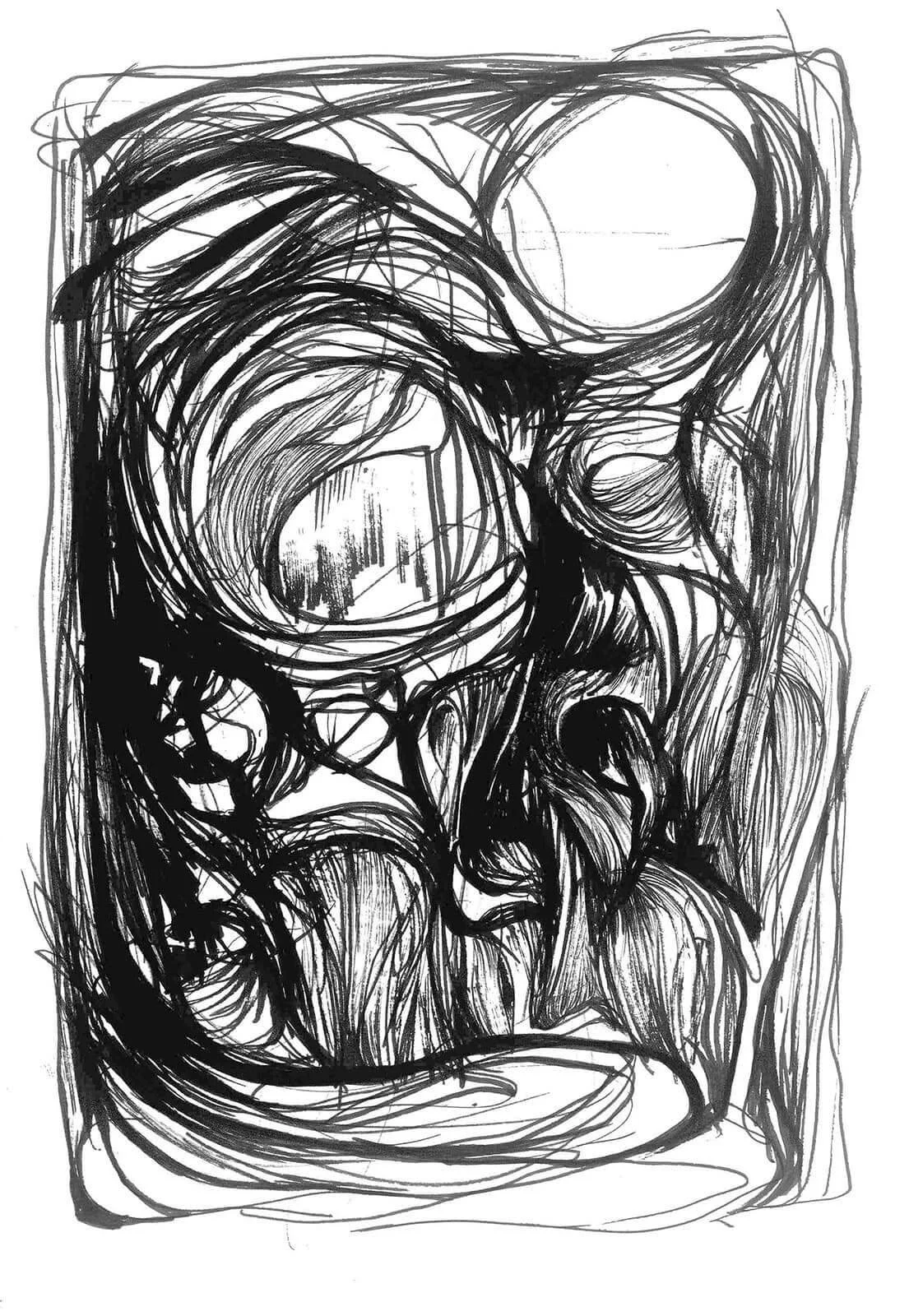
Storm
I felt the animal raging beneath the surface — something that had been trying for decades to steal energy from others like a thief. And because it could never truly get what it wanted, it only grew more and more frantic.
It raged all the way to the accident and the panic disorder, trying to obtain something it would never really be able to receive from others.
Perhaps this was the moment when I first had to face the darkness within me. A shadow world.
During those minutes of screaming it felt almost as if I had fallen into a trance.
Once I felt emptied out, I sat down, dizzy, and stared ahead of me for several minutes. The storm of emotions gradually gave way to an unfamiliar sense of calm.
After about ten minutes I slowly got back on my feet and walked toward the nearby forest.
All I could hear was birdsong as I moved along a narrow woodland path beneath the shade of oak trees. Eventually I reached a small clearing where I sat down and began to practice attention.
The still water had been thoroughly stirred.
While meditating, the tingling sensation of the energy murmuring around me slowly carried me toward a half-dreaming state — until suddenly I woke with a start.
It was beginning to get dark.
That evening I rode home along a deserted road lying between what felt like an endless field and a sparse stretch of forest, watching the sun as it slowly set.
I felt closer to myself than ever before.
I knew that things had surfaced which would demand a great deal of work from me. And yet I felt a quiet happiness, knowing that a part of me had finally recognized what it had once denied.
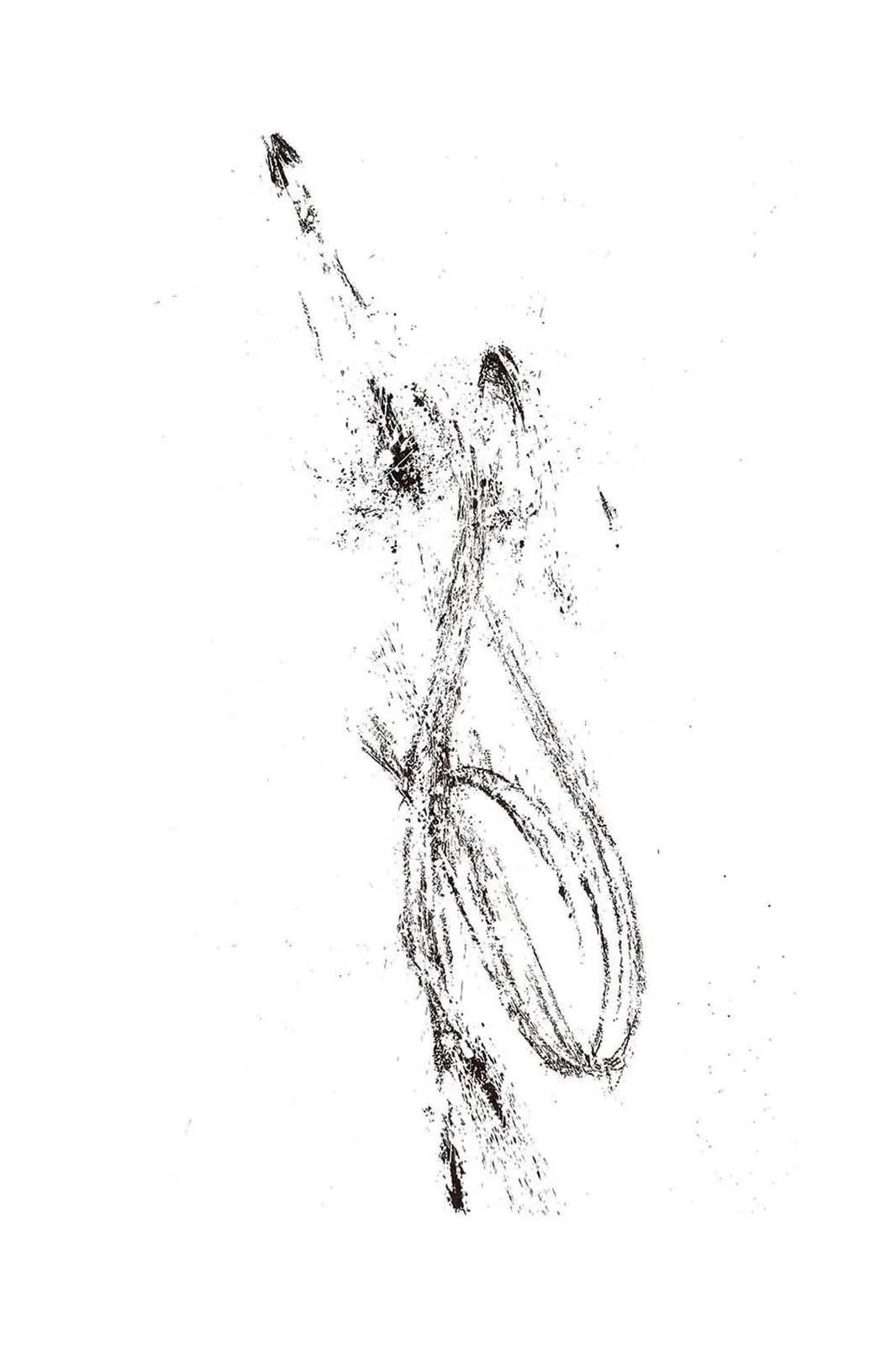
Drifting
A few days later, during illustration class, I was working on drawings for a calendar project. I had already been at it for weeks, but I couldn’t really move beyond realistic representation.
Maybe it came from all the study drawings — I’m not sure. Back then I still believed that beauty lived in meticulous detail.
In truth, whenever I wasn’t doing studies, I was simply copying.
And on that particular day the feeling surfaced again for a moment.
As I looked at the drawing, it radiated the same need for approval that I had screamed out of myself only a few days earlier. I had no desire to continue copying.
It made me feel so hypocritical that I almost wanted to destroy it — along with every carefully polished, over-decorated little detail.
Instead, in a sudden impulse, I grabbed a sheet of paper, two markers, and a bottle of ink, and just attacked it.
And then it came.
Everything that had to come. The forest. The birds. And the energy that had stayed with me since that day after the screaming.
I almost broke into a sweat.
The intensity of it was such that I barely even looked at the paper. I just left it on the table and walked over to the window to catch my breath.
I stayed there for several minutes.
Meanwhile Szasza, one of my teachers at the time, was making his usual round in the classroom, glancing at everyone’s work in progress. From the other side of the room I could see that in a few steps he would reach mine as well.
An uneasy feeling came over me. I didn’t want that.
The energy in it felt too personal.
In the end I just said to myself: fine, I don’t care.
I was just about to head to the bathroom when I heard Szasza’s familiar voice — slightly gruff, but warm at the same time.
“Who made this?”
Out of the corner of my eye I saw that he was standing right above my drawing.
“Did you do this, Dani?”
“Yes,” I replied.
“Come here.”
Suddenly I was reminded of the very first disciplinary warning I had ever received in school.
When I stepped closer, I saw my hyperrealistic drawing placed next to the ink piece I had just scribbled out.
“Listen, Dani.”
He pointed at the realistic drawing.
“Anyone can do this.”
Then he pointed at the ink drawing.
“But this — they can’t.”
He repeated it a few times, then looked at me and added:
“This is finally honest. Not like those hyperrealistic kitsch pieces. No offense… But here, you’re actually in it. This is the direction we should continue in.”
And suddenly everything settled.
Those few days — the built-up anger, the forest, the birds — it all felt as if it had been part of the same unfolding.
Something shifted at that moment.
As if the shadows within me had simply found their way onto the page.
After so many years of denial, I had no choice but to face them.
Without that, there can be no real ascent.
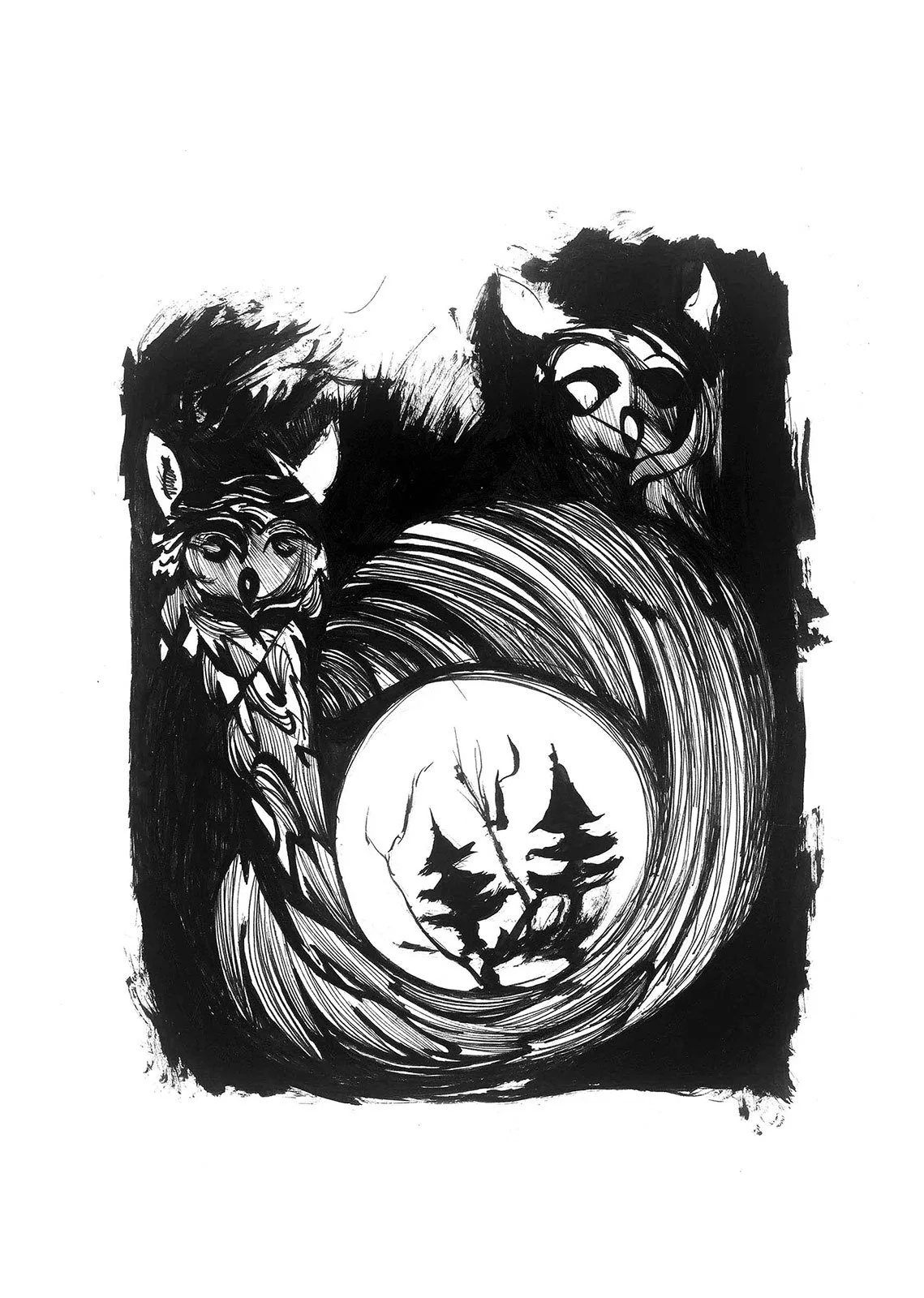
That particular imprint.